
I T ’ S WI S E TO L EARN WHE THE R YOU MAY I NDE ED
be at increased risk, so you can start to prevent a
catastrophic event—heart attack or even stroke.
“Fortunately, we can change or control many heart
attack risk factors,” says Shaun Harper, MD, PeaceHealth
Southwest Heart & Vascular Center Cardiology. “They
include lifestyle habits and conditions that contribute to
coronary artery disease—a hardening and narrowing of
the heart’s arteries from fatty plaque, which paves the way
for heart attacks.”
Use this checklist to see which risk factors apply to you:
You’re a man older than 45 or a woman older than 55.
Heart attack risk rises with age, and it does so earlier for
men than for women.
You have a family history of early heart disease.
You have high cholesterol. Excess amounts of LDL
cholesterol—the bad kind—clog the arteries. Low levels of
HDL cholesterol—the good kind—also raise your risk.
You smoke. Smoking damages arteries and can more
than double your heart attack risk.
Your blood pressure is high. Too much pressure against
your artery walls may make them narrow with time.
You don’t exercise much. Sedentary living boosts
your risk for heart trouble, whereas an active lifestyle has
the opposite effect.
You’re overweight or obese. Excess weight burdens the
heart and makes other risk factors worse.
You have diabetes—especially if it’s not controlled.
Share this list with your doctor, and have a heart-to-
heart talk about your risk and what you can do to lower it.
Need a primary care doctor? Visit
FindYourDoctorRight.
com
to find a doctor who’s right for you.
L ENNY F ROS T WAS HAV I NG PA I N I N H I S L EGS . HE
decided to go in for a lunchtime screening at PeaceHealth
Southwest Heart & Vascular Center to get it checked out.
Shaun Harper, MD, called him later that same day and
delivered his results: He was clear of peripheral artery
disease, but he had a severely weakened heart, a serious
condition that could have taken his life at any time.
Lenny’s heart was pumping at about half the level it should
be. Dr. Harper scheduled him for follow-up tests.
ADJUSTMENTS THAT MADE A DIFFERENCE
Lenny was not in immediate need of a stent or surgery.
Instead, his heart disease and related issues, such as
cholesterol, were brought under control with a single
daily dose of medications. He is also eligible for lifestyle
counseling and rehabilitation.
Matt Nipper, an exercise physiologist who worked
closely on his case, says the Heart & Vascular Center
encourages proactive behavior like Lenny’s.
“We were able to treat him completely out of the
hospital on an outpatient basis,” he says. “We were
able to catch this thing early, get him treated and on
the right medications before he had some kind of
catastrophic event.”
IT TAKES A TEAM
As for Lenny, he is thrilled that his treatment was simple,
effective and inexpensive.
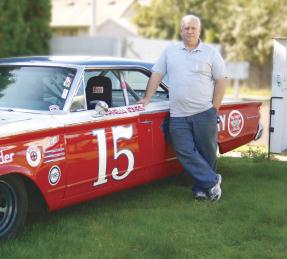
“I’m an old racecar guy, so I know what teamwork and
pit stop is all about—and I saw nothing but efficiency from
these guys,” he says. “They took me from being the next
one in line for calling an ambulance to being fixed up in
less than a year, just because I took a test.”
PAT I ENT P ROF I L E
INVEST IN YOUR
HEART HEALTH
The HeartCheck 360° screening
at PeaceHealth Southwest Heart
& Vascular Center is affordable
and available to anyone by
appointment. It doesn’t require a
physican’s referral.
The screening includes:
Echocardiogram
(heart ultrasound) and
electrocardiogram
Carotid ultrasound (neck artery
ultrasound)
Abdominal ultrasound
PADnet test for peripheral
artery disease
Cholesterol check with glucose
screen and blood pressure check
Call 360.514.7755 or visit
swHeartCheck.org or for more
information or to schedule a
screening.
Back on the road
A heart attack? Me?
Healthy Leads
to Happy
Shaun Harper, MD, FACC
PeaceHealth Southwest
Heart & Vascular Center
Cardiology
200 NE Mother Joseph Place,
Suite 400, Vancouver, WA 98664
360.256.2640
2
SOUTHWEST
health